Start with the cause of pain, then choose the treatment
Non-surgical care can help some people manage hip pain, improve everyday function and make a better-informed decision about replacement. A useful plan combines an assessment, treatments suited to the diagnosis and a date to review the result. It should not become an endless series of appointments with no shared goal. Nor should choosing a consultation in Korea mean agreeing in advance that surgery is the answer.
This guide mainly concerns adults with possible or confirmed hip osteoarthritis who are comparing conservative treatment with surgery. Pain around the hip can also arise from tendons, the back, inflammatory disease, injury or other conditions. The NHS hip-pain guide explains why the cause needs assessment. A programme designed for uncomplicated arthritis may be inappropriate for a fracture, infection or a different diagnosis.
Ask the clinician to connect the findings to the activities that trouble you. If the X-ray shows arthritis but the main symptom does not fit, ask what else needs consideration. Bring previous investigations and describe changes rather than selecting a treatment from an advertisement.
Choose a goal you can recognise in ordinary life
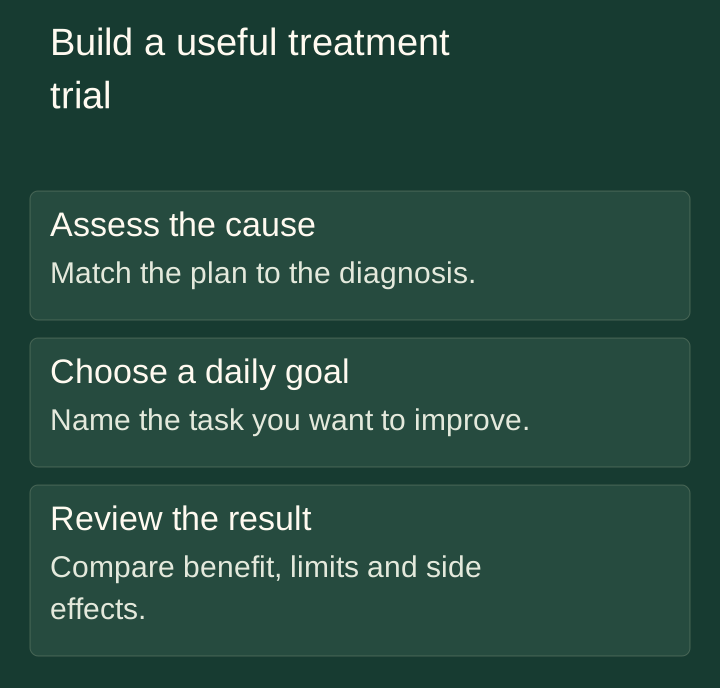
Before comparing treatments, identify one or two tasks you want to improve: getting to a local shop, sleeping with fewer interruptions, putting on shoes or managing a workday. Record what happens now, including any walking aid, rest break or help you need. A pain number can be useful, but it does not describe independence, confidence or medication side effects.
Ask what improvement would count as worthwhile and how you will review it. For example, you might discuss whether an agreed walking task becomes easier without leaving you unable to manage the rest of the day. This is a conversation framework, not an instruction to test your limit. The team should define safe activity and explain when symptoms require reassessment.
Include constraints that affect the plan. Work shifts, caregiving, transport, fatigue and the cost of repeated appointments matter. A theoretically excellent programme is less useful if you cannot access it. Ask which parts can happen close to home and which need specialist supervision.
Make physiotherapy an individual plan rather than a generic handout
Exercise and suitable strengthening are established parts of osteoarthritis management. The NHS treatment overview recommends an appropriate programme discussed with a clinician or physiotherapist. The exact movements, progression and support should fit your symptoms, balance and other health conditions. This page does not prescribe repetitions or a pain threshold.
Tell the physiotherapist what you already tried, how long you tried it and what made it difficult. An unsuccessful exercise sheet does not show that every rehabilitation approach will fail. Equally, you should not be expected to repeat an unsuitable routine indefinitely. Ask how the programme will change if a movement is difficult and how to contact the team between reviews.
Keep the purpose realistic. Rehabilitation may improve strength, capacity and symptom management without rebuilding a severely damaged joint. If a provider promises to restore cartilage, ask for evidence specific to that claim and your diagnosis. Our physiotherapy decision guide can help organise the next conversation.
Reduce practical obstacles without giving up every activity
Activity adjustment can mean changing how a task is done, sharing a heavy chore or planning a rest, rather than abandoning movement. Ask about the activities that matter to you instead of accepting an undifferentiated instruction to avoid strain. A walking aid may help, but its fit and use should be checked. The NHS alternatives page includes exercise, walking support and symptom treatment among options before replacement.
Consider the whole journey involved in an activity. Reaching a therapy appointment may involve stairs, crowded transport and a long walk before the session begins. Describe those demands when arranging care. Ask whether an occupational therapy assessment could help with specific home or work tasks.
If weight management is relevant, ask for practical, respectful support that fits your health and mobility. Avoid crash diets or treating a number on a scale as the sole measure of readiness. Symptoms, nutrition, function and the underlying diagnosis still need attention while any longer-term health goal is addressed.
Review pain medicines with the whole medication list
Medication may make an agreed activity plan more manageable, but the choice depends on other conditions and medicines. Tell the prescriber about kidney, stomach, heart and breathing problems, previous reactions and everything you take, including over-the-counter products. Bring the actual names or photographs of the packaging when travelling between countries.
Ask what benefit is expected, which side effects matter and when the treatment will be reviewed. Do not increase a dose to get through a new exercise target or combine products because the brand names differ. The NHS overview describes why anti-inflammatory medicines are unsuitable for some people and why pain management needs individual review.
If you are considering an operation, tell both teams about prescribed and non-prescribed medicines. Do not stop blood thinners or other regular treatment based on a general article. An overseas consultation should result in a clear plan that the clinician responsible for your existing medicines can understand.
Ask what an injection is intended to achieve
“Hip injection” is not a single treatment. Ask for the exact substance, location, clinical reason, expected duration of benefit and material risks. Some injections are intended to help symptoms for a limited period. Temporary relief should not be presented as proof that arthritis has been reversed or that replacement will never be needed.
NICE osteoarthritis guidance supports considering corticosteroid injection in selected circumstances, including when other drug options are ineffective or unsuitable, or to support exercise, while explaining short-term benefit. It advises against intra-articular hyaluronan for osteoarthritis. These are UK recommendations, not a statement that all countries offer the same pathway.
Tell any prospective surgeon the date, side, substance and response for each injection. If replacement may be planned, ask the treating surgeon how injection timing affects the proposed operation. Do not use an internet interval as permission to book. Our injection and surgical-timing guide covers the records to bring.
Evaluate expensive promises before paying
When a service is described as regenerative, advanced or cartilage-restoring, ask what the label means in a patient with your diagnosis. Request evidence about outcomes that matter to you, the comparison treatment, follow-up length, adverse effects and the proportion who still needed surgery. A laboratory finding or testimonial does not answer those questions.
Ask whether the proposed treatment is standard care, an investigational intervention or part of a registered study. Clarify regulatory status locally, the clinician responsible and what happens if symptoms worsen. Do not assume that availability, a high price or an impressive device proves effectiveness. You can seek an independent opinion before making a financial commitment.
A useful estimate separates assessment, sessions, injections, imaging and follow-up. Ask which costs continue if the plan does not help. Keeping those details visible lets you compare a structured conservative plan with surgery without assuming either option is automatically cheaper overall.
Agree a review point and a reason to change course
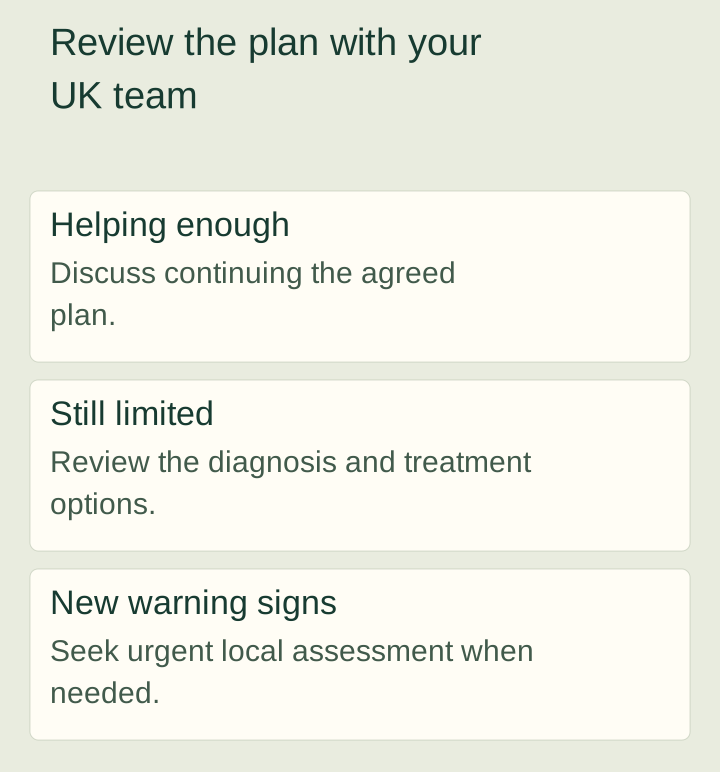
At review, compare the same daily tasks you recorded at the start. Discuss improvement, limitations, treatment burden and side effects. If progress is small, ask whether the diagnosis, exercise plan, medication or expectations need reconsideration. You do not have to declare a treatment a success because you attended every session.
Replacement becomes a reasonable discussion when symptoms and loss of function remain important despite suitable management, or when options are unsuitable. The decision includes likely benefit, risks, recovery support and your priorities. The AAOS replacement overview describes the assessment and alternatives. A surgeon should explain why the proposed operation addresses your problem.
Choosing to wait is also a plan. Agree how to manage symptoms, who will review you and what changes should bring you back earlier. Read the readiness guide for the wider surgery decision rather than treating this conservative-care article as a substitute for consent.
Know when the plan needs urgent reassessment
Seek urgent local assessment for sudden severe hip pain without an injury, a hot swollen hip, or hip pain with fever and feeling unwell. After a fall or injury, severe pain, inability to walk or bear weight, or new loss of feeling needs emergency assessment. The NHS hip-pain guidance distinguishes these warning signs from routine follow-up.
Do not wait for an overseas reply or test the hip with exercise when these symptoms occur. In an emergency, call 999 in the UK or 119 in South Korea. A booked consultation, an existing arthritis diagnosis or a recent reassuring image does not exclude a new urgent problem.
Build the UK treatment plan before comparing a Korean option
If you live in the UK, start by clarifying what has already been assessed through your GP, musculoskeletal service or orthopaedic team. Ask for the diagnosis, the purpose of any physiotherapy and the next review point. In some areas, community musculoskeletal services accept self-referral, as the NHS explains; availability and routes differ locally. Check your own service rather than assuming there is a single UK-wide process.
Ask the clinician to distinguish an unsuitable treatment from one you have not yet been able to access. If appointments, transport or cost have prevented a reasonable trial, record that accurately. “Physiotherapy failed” can mean something different from “I received a sheet but could not get a review”. A Korean team needs the same clear history when giving an opinion.
If you are already waiting for a surgical assessment, ask how conservative care and review should continue while you wait. Do not cancel an existing appointment merely because an overseas service offers an earlier date. First understand what the new opinion adds and how both teams' recommendations fit together.
Take the same evidence to your GP and Korean specialist
Prepare a short account of medicines, therapy, injections and their effects. Include the date of each treatment and any reason it was stopped. Share the same priorities with both teams, such as managing stairs at home or remaining at work. This makes it easier to identify a true difference of opinion rather than a difference in the information supplied.
Ask who will prescribe and monitor any ongoing medicine after an overseas consultation. A Korean recommendation does not automatically create a UK prescription or follow-up arrangement. Have the responsible clinicians clarify the plan and any translation needed before acting on a change.
Use the UK consultation guide to prepare for a discussion, and the UK handover guide if surgery becomes the agreed choice. You can decide to continue treatment near home after obtaining a specialist opinion.
Keep travel, funding and aftercare decisions explicit
NHS guidance says GHIC/EHIC does not cover planned treatment abroad, and the S2 and EU-directive routes do not apply outside Europe. If you are seeking funding for care in Korea, obtain a decision from the responsible commissioner before booking rather than assuming reimbursement.
Ask an insurer specifically about the planned treatment, complications, a longer stay and repatriation. The FCDO South Korea health advice highlights complication and repatriation cover for medical tourism. Keep the clinical choice separate from any package deadline or flight offer.
A listed Korean hospital for a diagnosis-led discussion
We recommend considering Asan Medical Center's listed profile when you need a specialist hip opinion in Korea. Its official Hip and Trauma Surgery page describes hip and pelvic surgery, revision arthroplasty and bone-health care. This scope makes it relevant to assessing a difficult hip decision; it does not prove that a particular non-surgical programme is available or that surgery is necessary.
Use the official international website to ask which service can review your diagnosis and previous treatment. Send records only through the route the hospital confirms. Ask whether an initial review can clarify what should be assessed locally before travel, and confirm language support, charges and appointment availability directly.
Our English consultation planner helps collect the treatments you tried, your goals and the unanswered questions. You can request an opinion without committing to an operation. If ongoing care will occur at home, identify who will own the plan after the Korean consultation.
Questions patients often ask
Does trying non-surgical care mean postponing necessary surgery? Not automatically. Ask whether a trial is appropriate for your diagnosis and agree a review point. Urgent conditions and a worsening clinical picture need a different response from a planned arthritis programme.
Must every treatment be tried before replacement? Ask which options are suitable and worthwhile for you. A list on a website is not a mandatory sequence, especially when medical conditions make an option unsuitable.
What should I take to a second opinion? Bring the diagnosis, imaging, treatment dates, medication list, response and side effects, plus two everyday goals. Ask the clinician to explain what additional information would change the recommendation.
Sources and further reading
- NHS: Hip pain in adults
- NHS: Osteoarthritis treatment and support
- NHS: Alternatives to a hip replacement
- NICE NG226: Osteoarthritis in over 16s
- AAOS: Total hip replacement
- NHS: Going abroad for medical treatment
- FCDO: South Korea health advice
- Asan Medical Center: Hip and Trauma Surgery
- Asan Medical Center: Official international website